Science
Confirms Turmeric As Effective As 14 Drugs
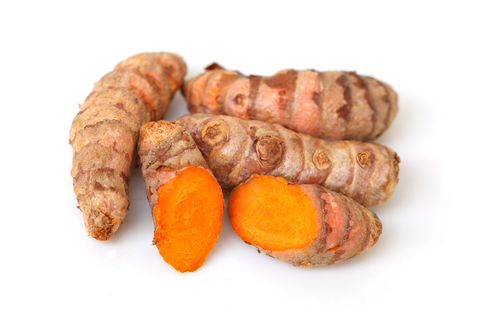
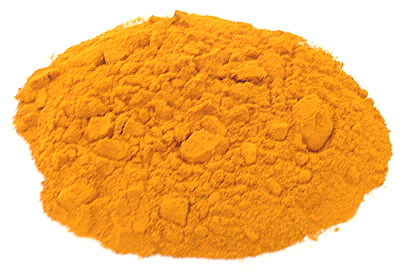
September 25, 2013 - Turmeric is one the most
thoroughly researched plants in existence today. Its
medicinal properties and components (primarily
curcumin) have been the subject of over 5600
peer-reviewed and published biomedical studies.
In fact, our five-year long research project on
this sacred plant has revealed over 600 potential
preventive and therapeutic applications, as well as
175 distinct beneficial physiological effects.
This entire database of 1,585 ncbi-hyperlinked
turmeric abstracts can be downloaded as a PDF at our
Downloadable Turmeric Document page, and acquired
either as a retail item or with 200 GMI-tokens, for
those of you who are already are members and receive
them automatically each month.
Given the
sheer density of research performed on this
remarkable spice, it is no wonder that a growing
number of studies have concluded that it compares
favorably to a variety of conventional medications,
including:
Lipitor/Atorvastatin(cholesterol
medication): A 2008 study
published in the journal Drugs in R & D found that a
standardized preparation of curcuminoids from
Turmeric compared favorably to the drug atorvastatin
(trade name Lipitor) on endothelial dysfunction, the
underlying pathology of the blood vessels that
drives atherosclerosis, in association with
reductions in inflammation and oxidative stress in
type 2 diabetic patients. [i] [For addition curcumin
and 'high cholesterol' research – 8 abstracts]
Corticosteroids (steroid medications): A 1999
study published in the journal Phytotherapy Research
found that the primary polyphenol in turmeric, the
saffron colored pigment known as curcumin, compared
favorably to steroids in the management of chronic
anterior uveitis, an inflammatory eye disease.[ii] A
2008 study published in Critical Care Medicine found
that curcumin compared favorably to the
corticosteroid drug dexamethasone in the animal
model as an alternative therapy for protecting lung
transplantation-associated injury by down-regulating
inflammatory genes.[iii] An earlier 2003 study
published in Cancer Letters
found the same drug also compared favorably to
dexamethasone in a lung ischaemia-repurfusion injury
model.[iv] [for additional curcumin and inflammation
research – 52 abstracts]
Prozac/Fluoxetine &
Imipramine (antidepressants): A 2011 study published
in the journal Acta Poloniae Pharmaceutica found
that curcumin compared favorably to both drugs in
reducing depressive behavior in an animal model.[v]
[for additional curcumin and depression research – 5
abstracts]
Aspirin (blood thinner): A 1986 in
vitro and ex vivo study published in the journal
Arzneimittelforschung found that curcumin has
anti-platelet and prostacyclin modulating effects
compared to aspirin, indicating it may have value in
patients prone to vascular thrombosis and requiring
anti-arthritis therapy.[vi] [for additional curcumin
and anti-plateletresearch]
Anti-inflammatory
Drugs: A 2004 study published in the journal
Oncogene found that curcumin (as well as
resveratrol) were effective alternatives to the
drugs aspirin, ibuprofen, sulindac, phenylbutazone,
naproxen, indomethacin, diclofenac, dexamethasone,
celecoxib, and tamoxifen in exerting
anti-inflammatory and anti-proliferative activity
against tumor cells.[vii] [for additional curcumin
and anti-proliferative research – 15 abstracts]
Metformin (diabetes drug): A 2009 study
published in the journal Biochemitry and Biophysical
Research Community explored how curcumin might be
valuable in treating diabetes, finding that it
activates AMPK (which increases glucose uptake) and
suppresses gluconeogenic gene expression (which
suppresses glucose production in the liver) in
hepatoma cells. Interestingly, they found curcumin
to be 500 times to 100,000 times (in the form known
as tetrahydrocurcuminoids(THC)) more potent than
metformin in activating AMPK and its downstream
target acetyl-CoA carboxylase (ACC). [ix]
Another way in which turmeric and its components
reveal their remarkable therapeutic properties is in
research on drug resistant- and multi-drug resistant
cancers. We have two sections on our site dedicated
to researching natural and integrative therapies on
these topics, and while there are dozens of
substances with demonstrable efficacy against these
chemotherapy- and radiation-resistant cancers,
curcumin tops both lists:
Cancers: Drug
Resistant
Cancers: Multi-Drug Resistant
We have found no less than 54 studies indicating
that curcumin can induce cell death or sensitize
drug-resistant cancer cell lines to conventional
treatment.[x]
We have identified 27 studies
on curcumin’s ability to either induce cell death or
sensitize multi-drug resistant cancer cell lines to
conventional treatment.[xi]
Considering how
strong a track record turmeric (curcumin) has,
having been used as both food and medicine in a wide
range of cultures, for thousands of years, a strong
argument can be made for using curcumin as a drug
alternative or adjuvant in cancer treatment.
Or, better yet, use certified organic
(non-irradiated) turmeric in lower culinary doses on
a daily basis so that heroic doses won’t be
necessary later in life after a serious disease sets
in. Nourishing yourself, rather than self-medicating
with ‘nutraceuticals,’ should be the goal of a
healthy diet. [learn more at Sayer Ji's new
collaborative project EATomology]
[i] P
Usharani, A A Mateen, M U R Naidu, Y S N Raju, Naval
Chandra. Effect of NCB-02, atorvastatin and placebo
on endothelial function, oxidative stress and
inflammatory markers in patients with type 2
diabetes mellitus: a randomized, parallel-group,
placebo-controlled, 8-week study. Drugs R D.
2008;9(4):243-50. PMID: 18588355
[ii] B Lal,
A K Kapoor, O P Asthana, P K Agrawal, R Prasad, P
Kumar, R C Srimal. Efficacy of curcumin in the
management of chronic anterior uveitis. Phytother
Res. 1999 Jun;13(4):318-22. PMID: 10404539
[iv] J Sun, D Yang, S Li, Z Xu, X Wang, C Bai.
Effects of curcumin or dexamethasone on lung
ischaemia-reperfusion injury in rats. Cancer Lett.
2003 Mar 31;192(2):145-9. PMID: 18799504
[v]
Jayesh Sanmukhani, Ashish Anovadiya, Chandrabhanu B
Tripathi. Evaluation of antidepressant like activity
of curcumin and its combination with fluoxetine and
imipramine: an acute and chronic study. Acta Pol
Pharm. 2011 Sep-Oct;68(5):769-75. PMID: 21928724
[vi] R Srivastava, V Puri, R C Srimal, B N
Dhawan. Effect of curcumin on platelet aggregation
and vascular prostacyclin synthesis.
Arzneimittelforschung. 1986 Apr;36(4):715-7. PMID:
3521617
[vii] Yasunari Takada, Anjana
Bhardwaj, Pravin Potdar, Bharat B Aggarwal.
Nonsteroidal anti-inflammatory agents differ in
their ability to suppress NF-kappaB activation,
inhibition of expression of cyclooxygenase-2 and
cyclin D1, and abrogation of tumor cell
proliferation. Oncogene. 2004 Dec 9;23(57):9247-58.
PMID: 15489888
[viii] Lynne M Howells, Anita
Mitra, Margaret M Manson. Comparison of oxaliplatin-
and curcumin-mediated antiproliferative effects in
colorectal cell lines. Int J Cancer. 2007 Jul
1;121(1):175-83. PMID: 17330230
[ix] Teayoun
Kim, Jessica Davis, Albert J Zhang, Xiaoming He,
Suresh T Mathews. Curcumin
activates AMPK and suppresses gluconeogenic gene
expression in hepatoma cells. Biochem Biophys Res
Commun. 2009 Oct 16;388(2):377-82. Epub 2009 Aug 8.
PMID: 19665995
If you’re ready to take the
first step, begin your transformation by clicking
the transformations below!
Disclaimer: The
techniques, strategies, and suggestions expressed
here are intended to be used for educational
purposes only. The author, Drew Canole, and the
associated www.fitlife.tv are not rendering medical
advice, nor to diagnose, prescribe, or treat any
disease, condition, illness, or injury.
Turmeric has many medicinal properties, and is
used in South Asia as an antiseptic for cuts, burns
and bruises, and antibacterial agent.
Turmeric is popular as a tea in Okinawa, Japan,
and in Pakistan it is used as an anti-inflammatory
agent, and remedy for gastrointestinal discomfort.
Sayer’s five-year long research project on
turmeric revealed over 600 potential preventive and
therapeutic applications, as well as 175 distinct
beneficial physiological effects, and adds that a
growing number of studies have concluded turmeric
compares favorably to a variety of conventional
medications, including:
1. Lipitor/Atorvastatin(cholesterol
medication): A 2008 study published in the
journal Drugs in R & D found that a standardized
preparation of curcuminoids from Turmeric compared
favorably to the drug atorvastatin (trade name
Lipitor) on endothelial dysfunction, the underlying
pathology of the blood vessels that drives
atherosclerosis, in association with reductions in
inflammation and oxidative stress in type 2 diabetic
patients.
2. Corticosteroids (steroid medications):
A 1999 study published in the journal Phytotherapy
Research found that the primary polyphenol in
turmeric, the saffron colored pigment known as
curcumin, compared favorably to steroids in the
management of chronic anterior uveitis, an
inflammatory eye disease.
A 2008 study published in Critical Care Medicine
found that curcumin compared favorably to the
corticosteroid drug dexamethasone in the animal
model as an alternative therapy for protecting lung
transplantation-associated injury by down-regulating
inflammatory genes.
An earlier 2003 study published in Cancer Letters
found the same drug also compared favorably to
dexamethasone in a lung ischaemia-repurfusion injury
model.
3. Prozac/Fluoxetine & Imipramine
(antidepressants): A 2011 study published
in the journal Acta Poloniae Pharmaceutica found
that curcumin compared favorably to both drugs in
reducing depressive behavior in an animal model.
4. Aspirin (blood thinner): A
1986 in vitro and ex vivo study published in the
journal Arzneimittelforschung found that curcumin
has anti-platelet and prostacyclin modulating
effects compared to aspirin, indicating it may have
value in patients prone to vascular thrombosis and
requiring anti-arthritis therapy.
5. Anti-inflammatory Drugs: A
2004 study published in the journal Oncogene found
that curcumin (as well as resveratrol) were
effective alternatives to the drugs aspirin,
ibuprofen, sulindac, phenylbutazone, naproxen,
indomethacin, diclofenac, dexamethasone, celecoxib,
and tamoxifen in exerting anti-inflammatory and
anti-proliferative activity against tumor cells.
6. Oxaliplatin (chemotherapy drug):
A 2007 study published in the International Journal
of Cancer found that curcumin compares favorably
with oxaliplatin as an antiproliferative agenet in
colorectal cell lines.
7. Metformin (diabetes drug): A
2009 study published in the journal Biochemitry and
Biophysical Research Community explored how curcumin
might be valuable in treating diabetes, finding that
it activates AMPK (which increases glucose uptake)
and suppresses gluconeogenic gene expression (which
suppresses glucose production in the liver) in
hepatoma cells.
Interestingly, they found curcumin to be 500
times to 100,000 times (in the form known as
tetrahydrocurcuminoids (THC) more potent than
metformin in activating AMPK and its downstream
target acetyl-CoA carboxylase (ACC).
8. Turmeric Causes Recovery in
Alzheimer’s Patients
A recent study on patients with AD found that
less than a gram of turmeric daily, taken for three
months, resulted in remarkable improvements. Late
last year, a remarkable study was published in the
journal Ayu titiled “Effects of turmeric on
Alzheimer’s disease with behavioral and
psychological symptoms of dementia.”
Researchers described three patients with
Alzheimer’s disease whose behavioral symptoms were
“improved remarkably” as a result of consuming 764
milligram of turmeric (curcumin 100 mg/day) for 12
weeks. According to the study:
“All three patients exhibited irritability,
agitation, anxiety, and apathy, two patients suffer
from urinary incontinence and wonderings. They were
prescribed turmeric powder capsules and started
recovering from these symptoms without any adverse
reaction in the clinical symptom and laboratory
data.”
After only 3 months of treatment, both the
patients’ symptoms and the burden on their
caregivers were significantly decreased.
The report describes the improvements:
“In one case, the Mini-Mental State Examination
(MMSE) score was up five points, from 12/30 to
17/30. In the other two cases, no significant change
was seen in the MMSE; however, they came to
recognize their family within 1 year treatment. All
cases have been taking turmeric for more than 1
year, re-exacerbation of BPSD was not seen.”
9. Turmeric’s Cardiovascular Benefits
Found To Be As Powerful As Exercise
A remarkable clinical study found that an extract
of the golden spice known as turmeric was as
effective as an 8-week aerobic exercise program in
improving arterial blood flow in human subjects.
10. Turmeric May Repair and Regenerate
Diabetic Liver Function
Groundbreaking new research published in the
Journal of the Medical Association of Thailand found
that curcumin, the primary polyphenol in turmeric,
is capable of repairing and even regenerating the
liver tissues of diabetic rats.
11. Turmeric May Prevent Breast Cancer
According to a study that
appears online in the journal Breast Cancer
Research and Treatment, compounds (curcumin from
turmeric and piperine from black peppers) derived
from pepper and turmeric could help prevent breast
cancer by limiting the growth of stem cells that
promote tumor growth.
Sayer claims to have found no less than 54
studies indicating that curcumin can induce cell
death or sensitize drug-resistant cancer cell lines
to conventional treatment.
Considering turmeric (curcumin) has been used as
both food and medicine in a wide range of cultures
for thousands of years, Sayer insists that a strong
argument can be made for using curcumin as a drug
alternative or adjuvant in cancer treatment.