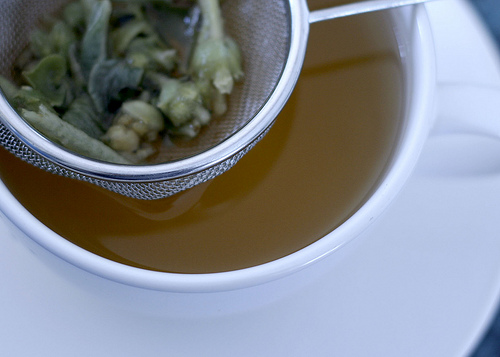
Greek Mountain Tea Elixer Of The Gods: Proven
Effective Against Colds, Flus, Ulcers, Osteoporosis
Cancer
Greek mountain tea has been used
for centuries as a cure for colds, flus, viruses,
digestive conditions and anxiety. The tea is known by
many names in Greece including Shepherd’s tea, Tea of
the Gods and τσαϊ του βουνού (pronounced tsah-ee too
voo-noo). It is an extremely hardy plant that grows wild
on the side of mountains at an altitude of over 3,300
feet and is found throughout Greece, Macedonia, Bulgaria
and Albania. Known by its formal name of Sideritus, or
Ironwort, the health benefits of mountain tea have been
known as far back as the time of Hippocrates, the father
of modern medicine who praised the tea for its healing
effects on the respiratory and immune system. Modern
clinical trials have shown the tea to be effective in
treating conditions such as osteoporosis, stomach
ulcers, bacterial infections and cancer.
Properties of Mountain Tea
Mountain tea has been found to
have antibacterial, antiviral, antimicrobial,
anti-inflammatory and antioxidative properties. A study
performed in Italy in 2006 found that Sideritis italica
was effective at killing almost 20 different strains of
bacteria including Helicobacter pylori and Salmonella
typhi. Another study performed in Greece at the
University of Patras found that mountain tea increased
the antioxidant activity of the midbrain by 72 % in
mice. The tea is also packed with flavonoids, saponine,
diterpenoids and essential oils.
Cancer
A study performed in Turkey in
2011 tested the antioxidative effects of Sideritus
caesarea against tricyclic antidepressant toxicity in
rats. The experiment separated the rats into 3 groups
consisting of a control group, a group treated with
tricyclic antidepressants, and the final group was given
tricyclic antidepressants and Sideritus caesarea. After
50 days, the third group displayed no significant
changes when compared to the first group. This led
researchers to conclude that “the constituents present
in Sideritis caesarea impart protection against
chemical-induced oxidative injury that may result in the
development of cancer.”
Osteoporosis
Researchers at the University of
Athens found that the water extract from Sideritis
euboea was able to promote the formation of osteoblasts,
the cells responsible for building bones. The results of
the study showed that Sideritis euboea extract was able
to reduce the secretion of three important molecules
(IL-6, OPG and RANKL ) that play a part in the formation
of osteoblasts and osteoclasts. The study also found
that the extract is rich in flavonoid glycosides, and
phenylpropanoid glycosides. In 2004, another study in
Greece tested the effects of four different herbs namely
Sideritis euboea, Sideritis clandestina, Marticaria
chamomilla, and Pimpinella anisum on the prevention of
bone loss that occurs with increasing age. Researchers
found that “all the plant extracts stimulate
osteoblastic cell differentiation and exhibit
antiestrogenic effect on breast cancer cells without
proliferative effects on cervical adenocarcinoma cells.”
The research concluded that the extracts could form the
basis for nutritionists to design ‘functional foods’
that may be able to prevent osteoporosis.
Stomach
Ulcers
There have been a wide number of
studies performed on the effects of Greek mountain tea
on various gastro-intestinal disorders. Researchers in
Turkey found that Sideritis caesarea amongst other herbs
had the ability to treat the symptoms of peptic ulcer
including stomach pain, acid reflux and heartburn. The
study concluded that “pharmacological experiments
clearly demonstrated that the extracts of all plants
given orally showed significant gastric protection
against the ethanol-induced gastric ulcer model in
rats.” Mountain tea has also been proven to be effective
against H. pylori, a strain of bacteria found in the
stomach that is responsible for the formation of ulcers.
Possible
Side Effects and Drug Interactions
Mountain tea contains no caffeine
and is generally considered safe for use. However, there
has been no research into the effects of Sideritis on
pregnant and nursing mothers so it is essential to
exercise caution before drinking the tea. Pregnant
women, children and those with underlying medical
conditions in Greece have all used the tea for centuries
without any reported problems, but check with your
regular medical practitioner if you are unsure.
How To
Use Greek Mountain Tea
Mountain tea works perfectly as a
replacement for coffee or caffeinated tea in the
morning. As it helps to promote a sense of calm and
relieve anxiety, it can also be consumed immediately
before bed. Put 8oz of water into a small pot. Take 2 or
three stems of mountain tea and break into 2 inch
sections. Add the buds, stems and leaves to the water
and boil for 5 – 10 minutes. Leave to cool slightly and
add fresh lemon slices and honey to taste.